
Trump will host the signing of a peace agreement between the leaders of Rwanda and the Democratic Republic of the Congo.
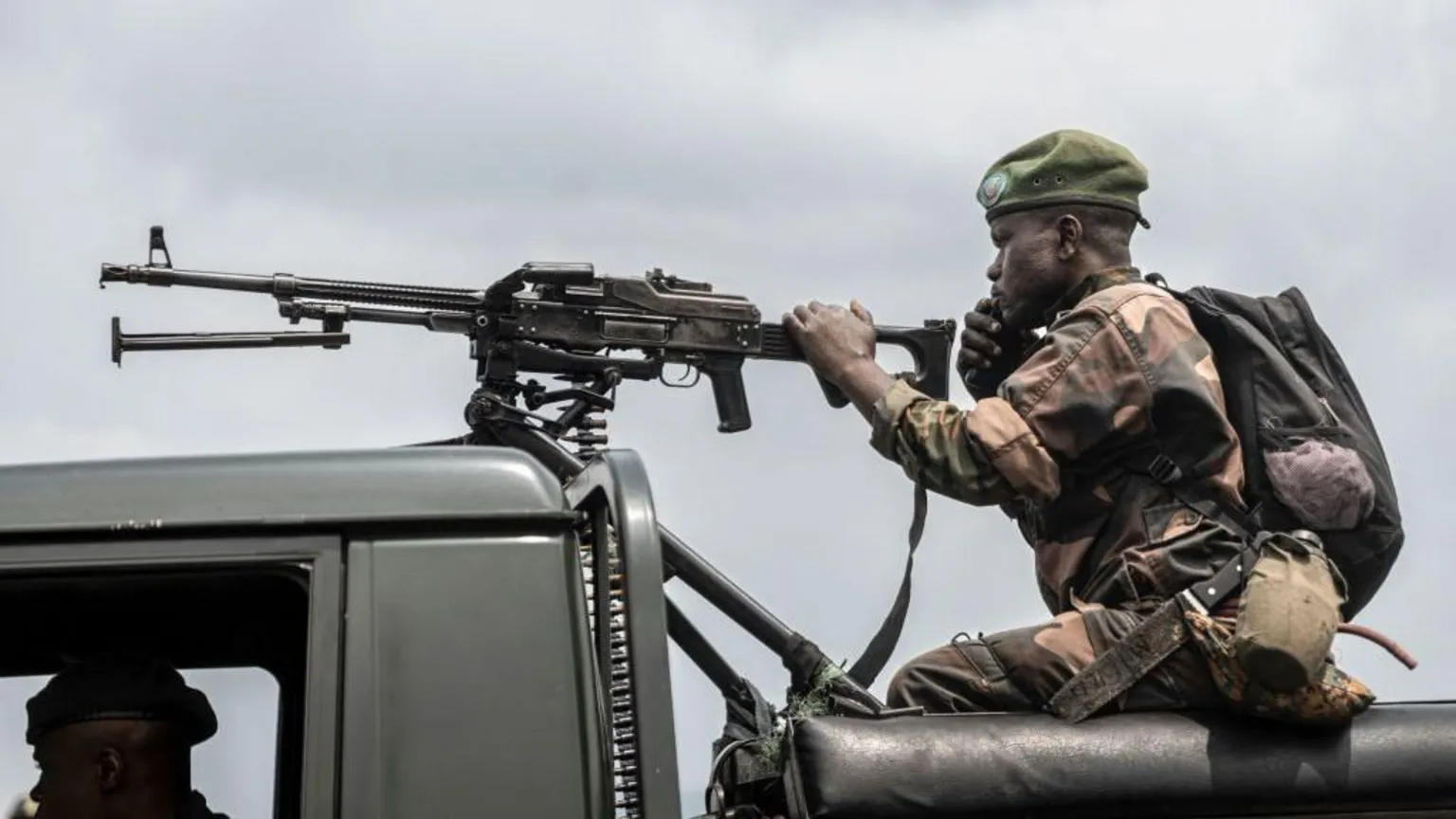
However, the path to peace isn't entirely smooth. Leading up to the summit, eastern DR Congo, a region abundant in natural resources, has seen a worrying surge in clashes. Government forces are locked in battle with rebels, widely believed to receive support from neighboring Rwanda. The accusations are flying, with DR Congo's army alleging that their rivals are deliberately trying to "sabotage" the peace efforts. On the flip side, the M23 rebels claim it was the army that broke a ceasefire, launching an offensive of their own. Earlier this year, the M23's offensive was particularly devastating, as they took control of significant areas in eastern DR Congo. This brutal campaign resulted in thousands of deaths and forced countless people to flee their homes.
The personal animosity between DR Congo's President Felix Tshisekedi and Rwandan President Paul Kagame is no secret. For years, these two leaders have traded barbs, each pointing fingers and blaming the other for igniting the conflict. Back in June, President Trump had already brought the foreign ministers of both nations together to sign a peace accord, which he proudly declared a "glorious triumph." Now, it's Tshisekedi and Kagame's turn to formally endorse the agreement. The signing ceremony is expected to draw a crowd of prominent African and Arab leaders, including those from Burundi and Qatar, highlighting the regional and international interest in this peace initiative.
Interestingly, the M23 rebels themselves won't be at the Washington summit. They're currently involved in their own separate peace discussions with the DR Congo government, a process being facilitated by Qatar. The Trump administration has been a key driver in these negotiations, with a clear strategic goal: they believe that settling the long-standing disputes between these two neighbors will open doors for increased US investments in this incredibly resource-rich part of the world. While Rwanda staunchly denies providing any support to the M23, UN experts have presented a different picture, suggesting that the Rwandan army is, in fact, in "de facto control of M23 operations." Earlier this year, the M23 rebels cemented their power by seizing crucial cities in eastern DR Congo, including Goma and Bukavu.
Adding to the tension, DR Congo army spokesman Gen. Sylvain Ekenge recently stated that the rebels launched a fresh offensive on Tuesday, targeting villages in the South Kivu province. These affected villages are located approximately 75km (47 miles) from Uvira city, which sits right on the border with Burundi. Notably, Uvira has served as the headquarters for the South Kivu regional government ever since Bukavu fell into rebel hands. The M23, however, offers a counter-narrative, asserting that it was the DR Congo army that initiated an air and ground assault on their positions, allegedly in collaboration with Burundian forces. Burundi has yet to respond to these claims. It's worth noting that Burundi maintains several thousand troops in eastern DR Congo, ostensibly to support the struggling government army.
Despite all the diplomatic pomp and the high-profile presence of both leaders in Washington, some analysts remain deeply skeptical about whether this deal will genuinely usher in lasting peace. Bram Verelst, a DR Congo researcher at the South Africa-based Institute for Security Studies, voiced his concerns to the BBC, highlighting that "currently no ceasefire is in place, and the M23 rebellion continues to expand and consolidate its control." He further added that while "the signing ceremony is unlikely to alter this situation," there's a slim chance it "could increase accountability on Congolese and Rwandan leaders to honor their commitments."
Rwanda, for its part, justifies its "defensive measures" in eastern DR Congo by citing the ongoing threat from the FDLR militia group. This group notably includes individuals who participated in the horrific 1994 Rwandan genocide. President Kagame's primary demand is the disarmament of the FDLR, while DR Congo's insists on the withdrawal of Rwandan troops as a non-negotiable condition for peace. The peace agreement awaiting signature reportedly addresses both these crucial points, calling for both disarmament and troop withdrawal.
However, history casts a long shadow. Numerous peace deals dating back to the 1990s have crumbled, largely because Rwanda has repeatedly accused previous Congolese governments of failing to disarm the FDLR. This unresolved issue remains a significant hurdle in the current efforts to secure lasting peace. Meanwhile, DR Congo's government has also made it clear that the M23 must relinquish the territory it has seized, a demand the rebel group has so far resisted during the ongoing Qatar-brokered negotiations.
Interestingly, Qatar and the US are coordinating their mediation efforts, with Qatar known for its strong ties to Rwanda, while the US is generally perceived as having closer relations with DR Congo. It's no secret why this region attracts such international attention: the US State Department reported in 2023 that DR Congo alone boasts an estimated $25 trillion (£21.2 trillion) in mineral reserves. These vast reserves include critical minerals like cobalt, copper, lithium, manganese, and tantalum – essential ingredients for manufacturing electronic components found in everything from computers and electric vehicles to mobile phones, wind turbines, and military equipment. Ahead of the June deal, President Trump candidly stated, "We're getting, for the United States, a lot of the mineral rights from the Congo as part of it," hinting at the economic benefits for the US.
Professor Jason Stearns, a Canada-based political scientist specializing in the region, explained to the BBC that the US has actively advocated for an economic agreement. This deal envisions DR Congo and Rwanda collaborating on vital projects such as hydro-electric power, mining, and infrastructure development. He elaborated, suggesting that "the logic is that it will provide the peace dividend," implying that economic cooperation could be a powerful incentive for stability. However, Professor Stearns also pointed out a significant caveat: DR Congo has firmly stated that while it's prepared to sign the agreement, it will not "advance on that deal until Rwandan troops have withdrawn from eastern DR Congo."