
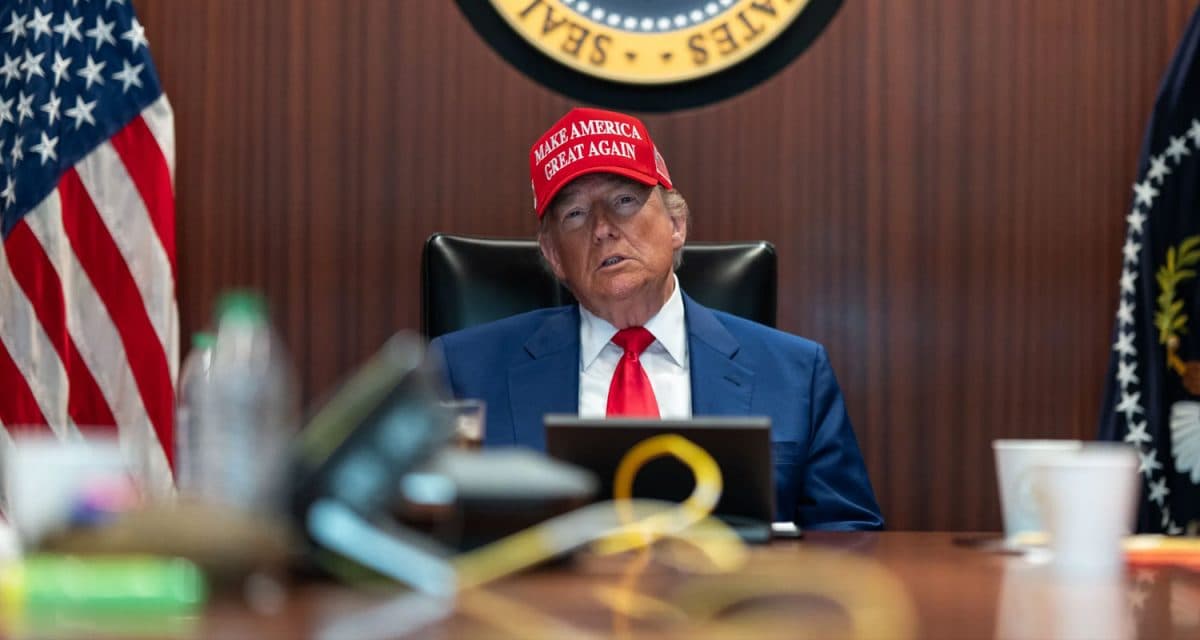
China and other nations cannot obtain Nvidia's best AI chips, according to Trump.
Trump made these statements during a televised interview on CBS's "60 Minutes" program and to reporters while traveling on Air Force One. He emphasized that only American customers would gain access to these top-tier Blackwell chips, produced by Nvidia, which currently holds the title of the world's most valuable company by market capitalization. "The most advanced, we will not let anybody have them other than the United States," Trump asserted to CBS.
These remarks signal a potential escalation in restrictions on high-end American AI chips, possibly extending beyond China to include other parts of the world. This is a tighter stance than what U.S. officials had previously suggested. The announcement also adds a layer of complexity following a recent deal where Nvidia committed to supplying over 260,000 Blackwell AI chips to South Korea, including major players like Samsung Electronics. This deal, announced just last Friday, had raised questions about the scope of future export controls.
Adding to the ongoing discussion, there's been speculation since August about whether Trump would permit the sale of a less powerful version of Blackwell chips to China. While he ruled out providing the most advanced chips to Chinese firms, he didn't dismiss the possibility of them acquiring a less capable variant. "We will let them deal with Nvidia but not in terms of the most advanced," he stated during the "60 Minutes" interview.
However, even the prospect of selling any version of Blackwell chips to Chinese companies has drawn sharp criticism from "China hawks" in Washington. They fear such a move could significantly boost China's military capabilities and accelerate its AI development. Republican Congressman John Moolenaar, who chairs the House Select Committee on China, starkly compared such an action to "giving Iran weapons-grade uranium".
Despite earlier hints that he might discuss the chip issue with Chinese President Xi Jinping during their recent summit in South Korea, Trump ultimately confirmed that the topic did not come up.
Nvidia's CEO, Jensen Huang, commented last week that the company has not sought U.S. export licenses for the Chinese market due to Beijing's clear stance. He noted that China has made it "very clear that they don't want Nvidia to be there right now" but also emphasized the necessity of access to the Chinese market to help fund U.S.-based research and development efforts.